
In Pennsylvania, the manufactured/mobile home and the land are assessed separately. The homeowner is typically taxed on the home, while the landowner is taxed on the land. If you own both the home and the land, you generally pay both taxes (often billed together or at least both in your name). Pennsylvania law requires the county assessment office to assess mobile/manufactured homes and explicitly says the land’s assessment must not include the home’s value.
**
This guide is general information for buyers, sellers, and dealers, not legal or tax advice. Pennsylvania property tax administration is local, so always confirm details with the county assessment office and local tax collector where the home sits.
The key concept: PA treats the home and the land as separate tax items
Pennsylvania’s Consolidated County Assessment law (Title 53) makes three important points:
- Counties must assess mobile/manufactured homes at “actual value.”
- If the home is taxed “as real estate,” it is assessed and taxed in the name of the home’s owner.
- The land is assessed separately and cannot include the value of the home sitting on it.
That separation is the foundation for “who pays what.”
Who pays property taxes in the most common Pennsylvania scenarios
Scenario A: You own the land and the home (private land, not a park)
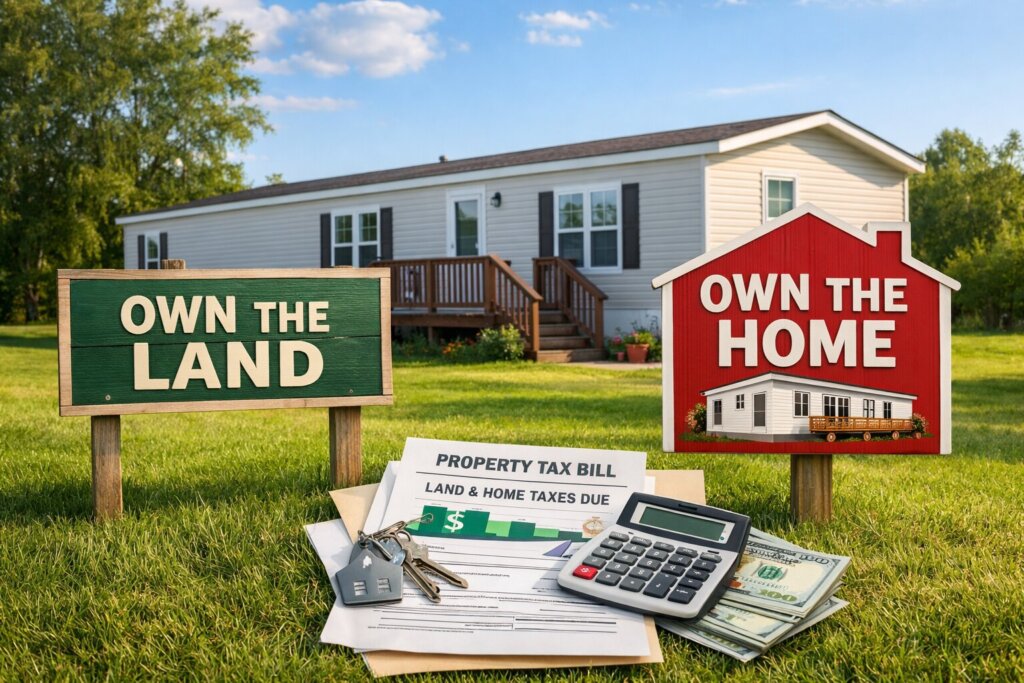
You pay:
- Land property taxes (as the landowner), and
- Home (manufactured/mobile home) property taxes (as the home’s owner)
Even if the county issues one combined bill in practice, the law’s valuation logic is still “separate land, separate home.”
Dealer takeaway: When quoting “estimated taxes,” make sure you’re not accidentally quoting only the land parcel (or only the home assessment).
Scenario B: You own the home but rent the lot in a manufactured home community (park)
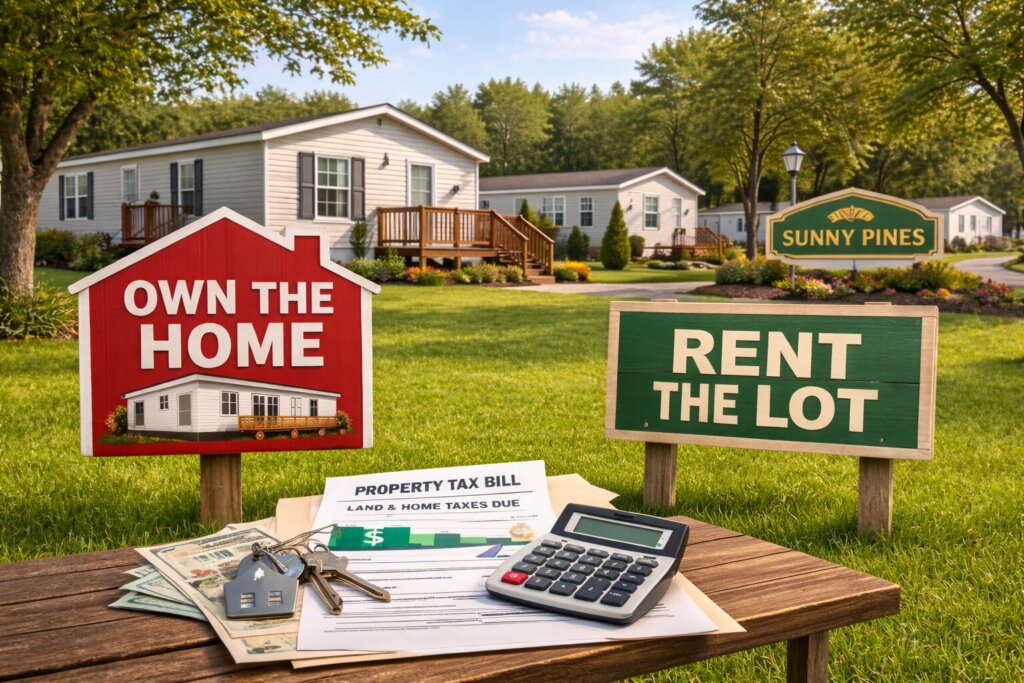
This is the classic “land vs. home” split:
Homeowner typically pays:
- Property taxes assessed on the home (because the home is assessed in the owner’s name).
Community/park owner typically pays:
- Property taxes assessed on the land (because the land is assessed to the landowner, separately).
A Pennsylvania township tax page describes it plainly: if you don’t own the land you’re assessed only for the mobile home; the land owner is assessed for the land.
Why parks keep records: PA law requires manufactured housing community owners to maintain lease records for homes that are subject to real property taxation, and to share move-in/move-out info with the county assessment office.
Scenario C: The home is being moved out of the taxing district
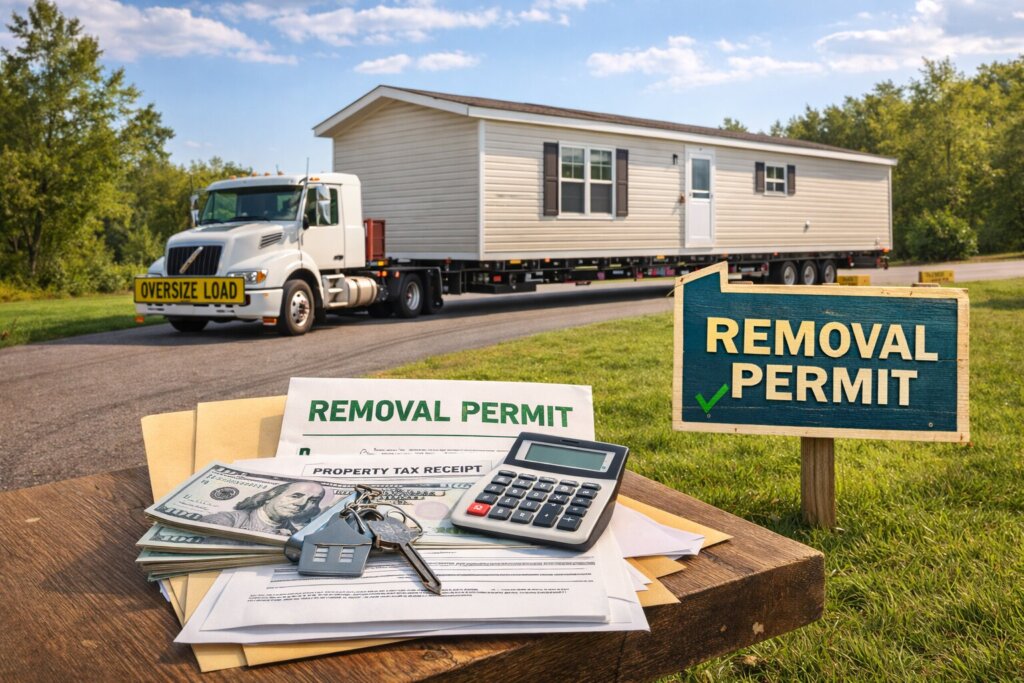
Pennsylvania law requires removal permits and payment of taxes assessed on the home being moved before it can be removed from the taxing district.
Dealer takeaway: If you’re buying a used home to relocate, taxes can become a transaction bottleneck, build it into timelines.
How PA decides the home’s taxable value (the “home” tax base)
When a county assessor values the manufactured/mobile home, they may consider items like:
- Valuation guides/directories
- Depreciation
- How easily it can be transported
- Fair market value approaches, excluding land value
- Improvements made to the home
Practical meaning: Two identical homes can have different assessed values if one has upgrades (additions, porches, roof-over, etc.) or is effectively less “movable.”
Real estate tax status matters during transfers (PennDOT + tax certification)
Pennsylvania connects real estate tax status to certain title transfers.
If a mobile/manufactured home:
- has been anchored to the ground to facilitate utility connections, and
- is offered for sale/transfer,
the transferor must obtain a tax status certification from the county Tax Claim Bureau showing real estate taxes due on the home, and provide it for the transfer.
PennDOT’s guidance also clarifies that if a home is not anchored (or other conditions apply), a self-certification form may be used in lieu of tax status certification.
Dealer takeaway: In PA, the home can be titled like a vehicle and still have real estate taxes due, so don’t assume “titled = no property tax.”
What happens if taxes on the home are unpaid—does it attach to the land?
For abandoned homes in manufactured home communities, Pennsylvania law states the home remains subject to the lien for taxes assessed against it, but the real estate (land) where it sits is not encumbered by that lien.
Why this matters: It reinforces the separation:
- Home tax problems follow the home/resident, not the park’s land (in this specific context).
“Who pays what” Breakdown
| Situation | Who pays tax on the land? | Who pays tax on the home? |
|---|---|---|
| Own land + own home | You (landowner) | You (homeowner) |
| Rent lot in a park | Park/community owner | You (homeowner) |
| Buying/selling an anchored home | Land tax depends on who owns land | Real estate taxes on the home must be cleared/verified for transfer paperwork in many cases |
Checklist for mobile home buyers: avoid surprises on PA mobile/manufactured home taxes
- Ask: Who owns the land? (Same buyer, separate parcel owner, or park.)
- Confirm the home’s assessment exists (some counties assign a parcel/account for the home itself).
- Request delinquency/tax status early, especially for anchored homes.
- If relocating: confirm removal permit requirements and that taxes assessed on the home are paid.
- When estimating carrying costs, quote lot rent + home tax + (if applicable) land tax, not just one line item.
FAQ
Are mobile/manufactured homes subject to property taxes in Pennsylvania?
Yes. Pennsylvania law requires county assessment offices to assess mobile/manufactured homes, and homes subject to taxation as real estate are assessed and taxed in the owner’s name.
Is the land taxed together with the home?
Not in how PA requires valuation to be handled. The land must be assessed separately and cannot include the home’s value.
If I rent a lot in a mobile home park, do I pay the land taxes?
Typically no, you pay taxes on the home, while the landowner (park) pays taxes on the land. Many local tax offices describe it this way.
If I own both the land and the home, who pays?
You generally pay both: land taxes as the landowner and home taxes as the home’s owner. The home and land are separate assessments even when owned by the same person.
How does the county decide the home’s assessed value?
Assessors may use valuation guides, depreciation, market approaches (excluding land), transportability, and improvements to determine actual value.
Do I need to prove property taxes are paid when selling a mobile/manufactured home in PA?
Often yes, especially if the home is anchored and being transferred. PA law requires a tax status certification in those cases, and PennDOT explains the documentation process.
What is “tax status certification” for a mobile home transfer?
It’s documentation from the county Tax Claim Bureau showing real estate taxes due on the home as of the certification date, used as part of certain title transfers.
What if the home is not anchored or doesn’t meet the certification conditions?
PennDOT guidance allows a self-certification form in lieu of the tax status certification in certain situations (for example, if the home is not anchored).
Can I move my mobile/manufactured home to another taxing district without dealing with taxes?
Not legally. Pennsylvania requires notice/removal permits, and removal permits are tied to paying taxes assessed on the home being moved.
If a homeowner owes taxes on an abandoned home in a park, can the tax lien attach to the park’s land?
Pennsylvania law states the home remains subject to the lien for taxes assessed against it, but the land where it is/was located is not encumbered by that lien (in the abandoned-home context).